 Postry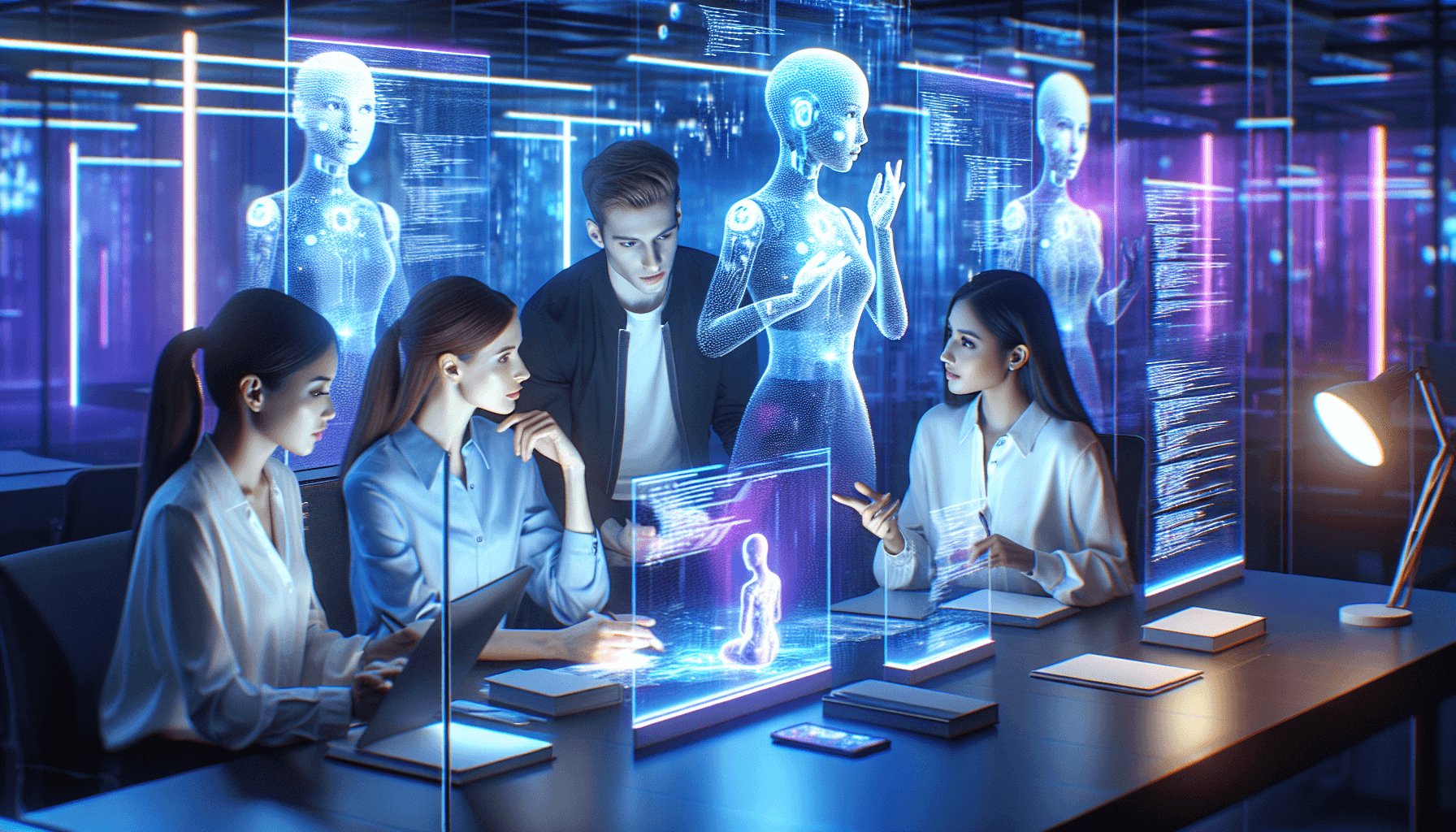
The silent revolution in the programming world
We are witnessing an unprecedented shift in how software is created. Artificial intelligence has moved beyond being just an auxiliary tool to become an active partner in the development process. A new generation of programmers is emerging — professionals who were born in the era of code assistants, language models, and intelligent automation.
This transformation doesn't mean the end of traditional programmers. On the contrary, it represents an evolution in the profession, where human skills like critical thinking, systems architecture, and creativity become even more valuable when combined with AI's computational power.
Who are the new generation programmers?
Programmers entering the market today have a completely different relationship with technology. They grew up with access to tools like GitHub Copilot, ChatGPT, Claude, and other generative AIs that transformed the way code is written.
Unlike previous generations who needed to memorize syntax and consult extensive documentation, these new professionals focus on:
- Prompt engineering: knowing how to ask AI to generate the right code is a fundamental skill
- Review and validation: understanding AI-generated code, identifying flaws, and optimizing solutions
- Systems architecture: thinking about the macro structure while AI handles implementation details
- Complex problem solving: focusing on challenges that AI still can't solve on its own
- Tool integration: combining multiple AIs and automations to create efficient workflows
The tools shaping this generation
The ecosystem of AI tools for development has grown exponentially in recent years. Some of the most impactful include:
Real-time code assistants like GitHub Copilot and Cursor have revolutionized the code editor. They suggest entire lines, complete functions, and even project architectures based on the context of what the developer is writing.
Advanced language models like GPT-4, Claude, and Gemini allow programmers to discuss complex technical problems, receive detailed explanations, and obtain customized solutions for their specific projects.
AI-powered no-code and low-code platforms are democratizing software creation, allowing people without traditional technical training to build functional applications with the help of artificial intelligence.
Intelligent debugging tools can identify bugs, suggest fixes, and even predict problems before they happen, drastically accelerating the development cycle.
The impact on the job market
Contrary to pessimistic predictions, AI is not eliminating programming jobs — it's transforming them. Recent research shows that demand for developers continues to grow, but the desired profile has changed significantly.
Companies now seek professionals who know how to work with AI, not despite it. The productivity of a developer who masters AI tools can be three to five times greater than one who works traditionally.
New roles are emerging in the market:
- AI-augmented developers: programmers who integrate AI into every stage of their workflow
- Prompt engineers: specialists in extracting the maximum from generative AIs
- AI code reviewers: professionals focused on validating and improving AI-generated code
- ML ops engineers: responsible for maintaining AI infrastructures in production
The challenges of this new era
Despite exciting advances, the new generation of programmers faces unique challenges that deserve attention.
Excessive AI dependency is a real concern. Programmers who blindly trust generated code without understanding the fundamentals can create fragile and insecure systems. Critical thinking remains irreplaceable.
Security and quality of AI-generated code don't always meet necessary standards. Vulnerabilities can be silently introduced if the developer lacks sufficient knowledge to identify them.
Ethical and intellectual property questions about AI-generated code are still being debated. Who is the author of code written by a machine? How do we ensure there are no license violations?
The fundamentals gap concerns educators. If new programmers skip directly to high-level tools without understanding basic concepts like data structures, algorithms, and computational complexity, they may struggle with problems that AI doesn't solve well.
How to prepare for this future
For those just starting out or wanting to adapt to this new reality, some strategies are essential:
- Master the fundamentals: programming logic, data structures, and algorithms remain the foundation. AI is a tool, not a substitute for knowledge
- Learn to work with AI: practice prompt engineering, test different tools, and understand their limitations
- Develop critical thinking: question generated code, understand why it works, and identify when it might fail
- Focus on soft skills: communication, teamwork, and problem-solving are skills that AI doesn't replace
- Stay updated: the field evolves rapidly, and keeping up with developments is essential to staying relevant
The future is collaborative
The new generation of programmers doesn't compete with AI — it collaborates with it. The future of software development is a partnership between human creativity and the computational capability of artificial intelligence.
Professionals who embrace this change and invest in developing both traditional technical skills and AI competencies will be in the best position to lead the next era of technology. Programming isn't dying — it's evolving, and those who evolve with it will have unprecedented opportunities.
The time to adapt is now. Whether you're a veteran with decades of experience or someone taking your first steps in code, AI is a powerful ally waiting to amplify your potential.