 Postry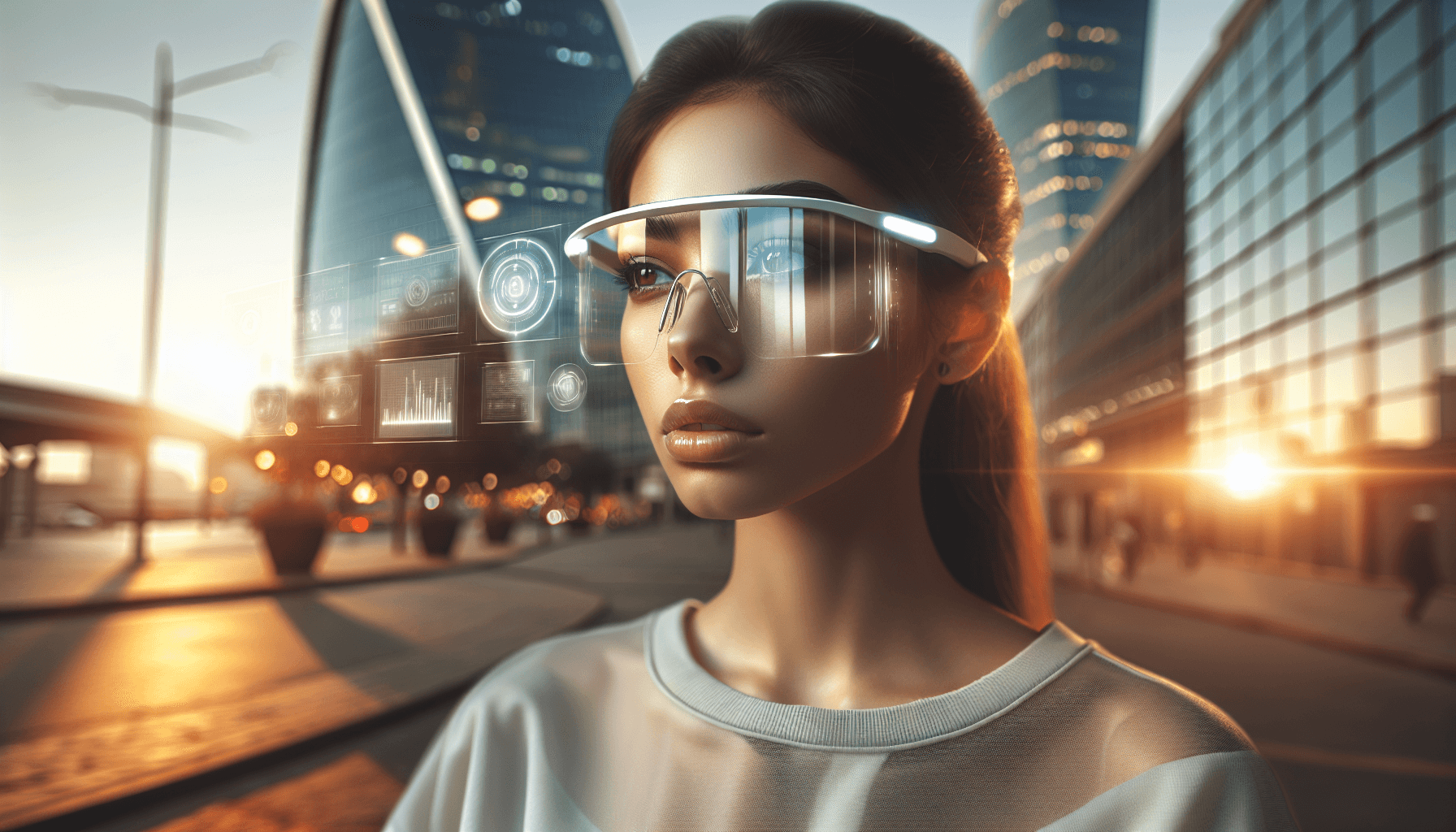
The Future Is Right Before Your Eyes — Literally
Smart glasses are evolving from a futuristic concept into an increasingly present reality in everyday life. Unlike smartphones, which require you to look away from the real world, smart glasses promise to integrate digital information directly into your field of vision, creating a truly immersive and natural technological experience.
Major tech companies like Meta, Apple, Google, and innovative startups are investing billions in developing these wearable interfaces. The question is no longer whether smart glasses will replace smartphones, but when it will happen.
How Modern Smart Glasses Work
The latest generation of smart glasses combines several advanced technologies into a compact and elegant form factor. Key components include:
- Augmented reality (AR) displays: project digital information over the real world using micro-LEDs or optical waveguides
- Eye-tracking sensors: allow you to interact with virtual elements just by looking at them
- Cameras and LiDAR sensors: map the environment in real time to precisely position virtual objects
- Artificial intelligence processors: interpret voice commands, gestures, and environmental context
- 5G and Wi-Fi 7 connectivity: ensure real-time data transmission with minimal latency
This combination of hardware allows smart glasses to function as a true extension of your brain, presenting relevant information at the right moment without you having to search for it.
Practical Applications Already Changing Lives
Smart glasses use cases go far beyond entertainment. Professionals across various fields are already experiencing significant gains in productivity and safety with this technology.
In medicine, surgeons use AR glasses to visualize imaging exams overlaid on the patient during procedures, reducing operation time and increasing precision. Industrial maintenance technicians receive step-by-step instructions directly in their field of vision, reducing errors and accidents.
In daily life, smart glasses already enable real-time simultaneous conversation translation, GPS navigation with arrows projected onto the sidewalk, discreet notifications without pulling out your phone, and even face identification with contextual information during business meetings.
Privacy and Ethics: The Challenges We Must Face
With great power comes great responsibility. Smart glasses raise serious questions about privacy and surveillance. When anyone can discreetly record video or use facial recognition in public, the boundaries between convenience and privacy invasion become blurred.
Legislators around the world are racing to create appropriate regulations. The European Union has already included wearable devices with cameras in AI Act discussions, while cities like San Francisco have debated bans on facial recognition in public spaces.
Manufacturers themselves are implementing solutions such as indicator LEDs that light up when the camera is active, granular permission controls, and local processing of sensitive data to minimize leak risks.
The Battle of the Giants: Who Leads the Market
The smart glasses market is booming, with different approaches competing for consumer preference.
Meta, with its Ray-Ban Meta glasses, bet on a familiar design and gradual functionality, starting with a camera and AI assistant before adding an AR display. Apple entered the premium segment strongly with the Vision Pro and is working on lighter, more affordable versions. Google returned to the market after the original Glass failure, now focusing on enterprise use and strategic partnerships.
Startups like Brilliant Labs with the Frame, and Xreal with their consumer AR glasses, are democratizing access to the technology with more competitive prices and innovative designs.
Artificial Intelligence: The Brain Behind the Glasses
What truly transforms smart glasses into a powerful personal interface is embedded artificial intelligence. Multimodal language models simultaneously process what you see, hear, and say to offer real-time contextual assistance.
Imagine walking through a foreign city and having translated captions appear over signs, or looking at a dish in a restaurant and instantly receiving nutritional information. AI makes smart glasses proactive, anticipating your needs based on behavioral patterns and environmental context.
Virtual assistants integrated into the glasses can schedule appointments during a conversation, summarize emails while you walk to work, and even suggest responses during video calls — all discreetly and naturally.
Health and Wellness: A New Frontier
Smart glasses are also positioning themselves as health monitoring devices. Integrated sensors can measure heart rate through blood vessels in the temple, detect signs of eye fatigue, and even monitor early neurological indicators.
For visually impaired people, smart glasses represent a revolution. Devices like Envision Glasses already use AI to describe the environment, read text, and recognize people, restoring autonomy and independence to millions of users.
What to Expect in the Coming Years
Predictions for the smart glasses market are extremely optimistic. Analysts estimate the segment will reach over 50 billion dollars by 2030, with more than 100 million units sold annually.
The next generations of smart glasses should bring significant advances in battery life, display quality, component miniaturization, and integration with existing ecosystems. The convergence of generative AI, cloud computing, and wearable hardware is creating perfect conditions for smart glasses to become as indispensable as smartphones are today.
The transition won't be immediate, but it is inevitable. Smart glasses are ready to become the next great personal interface — and those who adapt first will have a significant advantage in this new technological paradigm.